
Blog
Beyond the basics: advanced 1031 exchange strategies your clients need to know

For real estate professionals, the 1031 exchange is one of the most powerful tools in a client’s investment arsenal — but too many transactions stop at the fundamentals. Here’s how to take your advisory approach to the next level.
1. Think in portfolios, not properties
The most common mistake agents make is helping clients exchange one-for-one — a single relinquished property for a single replacement. Savvy investors use the 1031 exchange to restructure their entire portfolio: consolidating several smaller properties into one institutional-grade asset, or the reverse, diversifying a single large holding into multiple properties across markets.
When advising clients, start with where they want to be in 10 years, not just what they’re selling today. The exchange is the vehicle; their investment thesis is the destination.
2. Delaware Statutory Trusts (DSTs) as replacement property
DSTs have become one of the most underutilized strategies in the 1031 space. A Delaware Statutory Trust allows clients to invest in fractional ownership of institutional-quality assets — think Class A multifamily, net-lease medical buildings, or industrial distribution centers — without the management overhead.
For clients who are ready to step back from active management but aren’t yet prepared for the tax consequences of a sale, DSTs offer a compelling bridge. They also solve a critical timing problem: DST interests can typically be identified and acquired quickly, making them an excellent backup identification option when the primary replacement property falls through.
DAYS TO IDENTIFY
DAYS TO CLOSE
MAX PROPERTIES
(3-PROPERTY RULE)
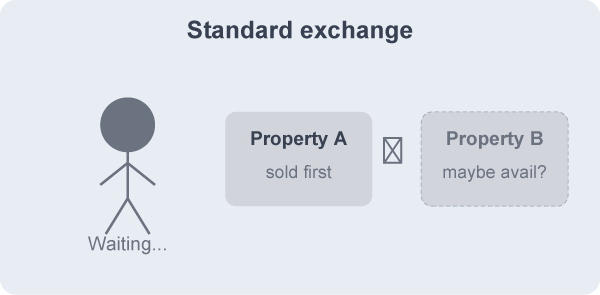
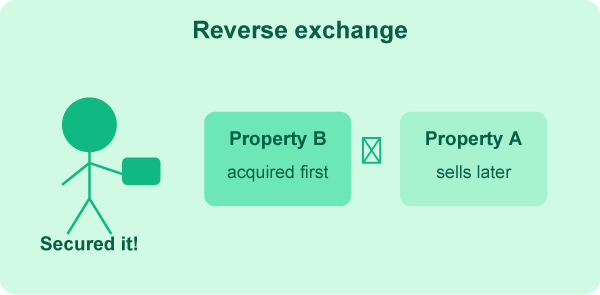
3. The reverse exchange: acquire first, sell later
In competitive markets, clients can’t always wait to close on the relinquished property before identifying and securing the replacement. A reverse 1031 exchange — where the replacement property is acquired first through an Exchange Accommodation Titleholder (EAT) — gives clients the flexibility to act on prime opportunities without losing their tax deferral.
This strategy requires careful coordination with a qualified intermediary and legal counsel, but in markets where the right asset won’t wait for a 45-day clock, it can make the difference between a transformative acquisition and a missed opportunity.
4. Geographic diversification and opportunity zones
A 1031 exchange has no geographic restrictions within the United States. Clients concentrated in a single market — whether due to legacy ownership or local expertise — can use an exchange to diversify into higher-growth metros or asset classes without a tax event crystallizing decades of appreciation.
For select clients, layering a 1031 exchange exit with an Opportunity Zone investment for any recognized boot can further reduce tax liability. While the Opportunity Zone incentive landscape has evolved, it remains a meaningful planning tool when the right investment fits the client’s risk profile and timeline.
5. Build your exchange referral network now
As an agent or broker, your value in a 1031 transaction extends well beyond finding the replacement property. Clients look to their trusted advisors to coordinate qualified intermediaries, tax counsel, and title companies — and those relationships take time to build before you need them.
Positioning yourself as a 1031-fluent professional — someone who understands timelines, entity structuring, and replacement property criteria — is one of the most durable competitive advantages in investment real estate today.
Ready to put these strategies to work for your clients?
1031 Exchange Network connects real estate professionals with qualified intermediaries, DST sponsors, and legal resources — everything you need to execute with confidence.